Werk ohne Autor (2018)


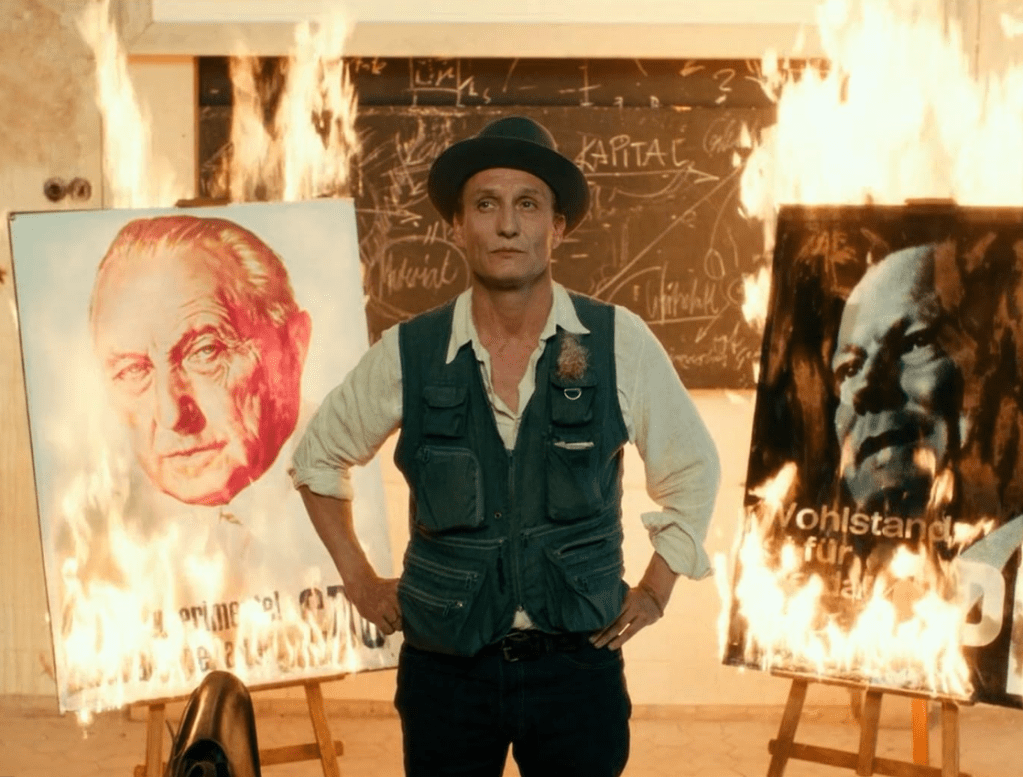


DVD CASE/SIDE

Length of film: 189 Minutes
Rated: 15
Genre: Drama, Romance, Biography
Director: Florian Henckel von Donnersmarck
Starring: Tom Schilling, Sebastian Koch, Paula Beer, Saskia Rosendahl, Oliver Masucci, Hanno Koffler, Hans-Uwe Bauer
IMDB Rank: 7.7/10
Part 1 Time: 112 Minutes
Part 2 Time: 77 Minutes
Where does the first part end? Kurt (Tom Schilling) and Ellie (Paula Beer) arrive safely in West Berlin to begin a new life together.
Final line of dialogue on the first part: “You were always good to me, so I hope you will believe me when I tell you that I haven’t made this decision lightly.” Kurt’s voice narrates what is written in the letter he has sent to Professor Horst Grimma (Hans-Uwe Bauer). Professor Horst Grimma then observes one of Kurt’s socialist murals being painted over in white.
First line of dialogue on the second part: “Hello, I’m Kurt,” Kurt introduces himself to Werner Blaschke (Hinnerk Schönemann) who is in the process of painting a portrait of his own son Klaus.
How jarring is it when the first part ends? Somewhat, tired of painting socialist realism murals, Kurt and Ellie leave East Berlin. Will Kurt make a name for himself in Western fine art, or is he too old to learn new art expression methods?
Which part is better? The plot of the film spans three decades (1940’s- 1960’s) following the life of painter Kurt Barnert and can be split into two distinct parts. The first half of the film, highlights Kurt’s life in East Germany during the cold war. With the second half exploring Kurt’s new life, establishing himself in West Germany. Part two is better as Kurt finally finds his artistic style, which not only brings to light past traumas, but also the lasting effects of the Nazi Racial Hygiene policy.
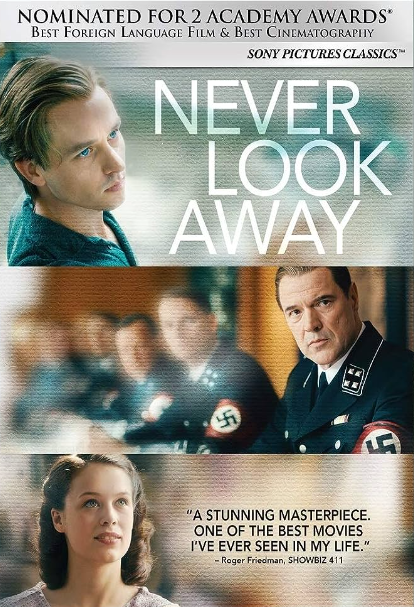
Academy Awards: Best Foreign Language Film (Nominated), Best Cinematography (Nominated)
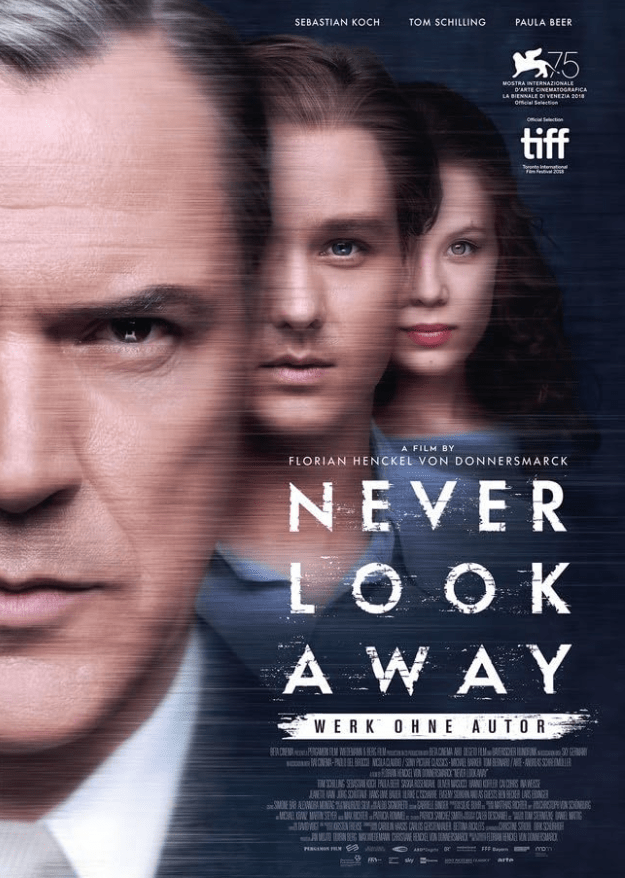
THEATRICAL POSTER
Works Cited
- Images and theatrical poster taken from IMDB from https://www.imdb.com/title/tt5311542/?ref_=ttmi_tt
 Hollywood Half-Time